Ukeru
One, two, three. Imagine being able to turn a volatile situation around. In the past, a participant started acting out and becoming violent and staff were trained to physically restrain them. This could lead to injuries of staff and participants. Maybe even more concerning was the effect the restraint had on an already traumatized youth. It could potentially destroy any trust the participant had in the staff….
Unlock the power of Ukeru: where “to receive” becomes a revolutionary approach. Embracing the essence of the Japanese word, Ukeru transforms how we handle behavioural challenges. Picture this: responding to trauma with openness, allowing individuals to release energy without restraint. It’s more than a system—it’s a trust-building journey.
Enter the world of Ukeru, where pads seamlessly blend into the environment, becoming allies, not threats. They’re not just pads; they’re building blocks for forts or comforting pillows. When agitation looms, these pads become your shield, eliminating the need for physical restraint.
In the event of participant dysregulation, Ukeru keeps the therapeutic relationship intact. The foam pads aren’t just tools; they’re guardians of safety for both staff and participants. As we strive to minimize re-straints, Ukeru lights the path toward a restraint-free future.
That’s what everyone involved is aiming for. Keeping everyone safe and at the same time strengthening the therapeutic relationship without having to result to laying your hands on someone.
Smudging
Guidelines for Indigenous Smudge Ceremony
As part of it’s commitment to being inclusive and culturally responsive, Ranch Ehrlo has created a Smudging Notification Procedure to enable participants and staff who choose to participate in smudging ceremonies while being respectful to those who are sensitive to smoke. All staff should be aware of this procedure and contact the Indigenous Advisor if wanting to plan a smudge ceremony.
Why Smudge?
Smudging is a practice that allows people to take a break from their busy lives and become grounded and centred. Smudging helps people release negative energies and let go of things that might be inhibiting their balance and focus. It is important to feel calm and safe while smudging to achieve this release of negativities. It is a way of cleansing oneself and is considered sacred.
Smudging was banned in Canada until the 1960s as part of the Indian Act. It is important to remember that smudging, as part of indigenous religion and culture, is a right of participants.
The guiding principle for all Aboriginal traditions is respect for all.
What is Smudging?
Smudging is a ceremonial practice that is common among many First Nations and Métis communities. It involves burning one or more sacred medicines, to create a fragrant smoke. The four sacred medicines used in these ceremonies are tobacco, sage, cedar, and sweetgrass. There are different ways and styles of performing a smudge, but all smudges are done to cleanse and connect our spirit with the Creator. Smudging is always voluntary. People should never be forced or pressured to smudge. It is completely acceptable for a person to indicate that they do not want to smudge, and that person may choose to stay in the room and refrain or leave the room.
How do we smudge?
The act of clearing the air, mind, spirit and emotions may be accomplished in a variety of ways, but according to First Nations’ practice, a smudge is led by a person who understands what it is and why it is done. That person may be an Elder or traditional teacher who has been invited to an event or a staff person who is knowledgeable about the practice.
How do we smudge?
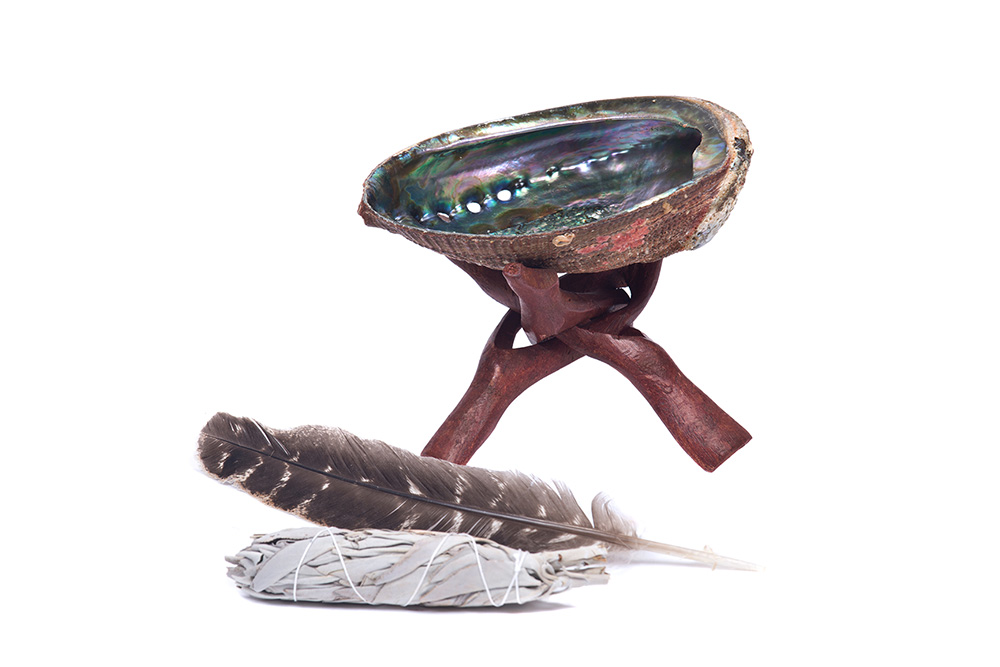
A container such as a shell, ceramic or stone bowl, or a copper, brass or cast-iron pan is typically used to hold the medicine. A match is used to light the medicine and once lit, the smoke is pushed forward with a feather or fan. The person who lights the smudge is the first to use it.
Sage is one of the commonly used medicines, and a “smudge ball” is made by rolling the plant’s leaves into a ball for burning. This medicine can produce a large amount of smoke so the smudge ball is kept relatively small. Only a small stream of smoke is needed for the person who is smudging. When we smudge, we first cleanse our hands with the smoke, as if we were washing them. Then, we draw the smoke over our heads, eyes, ears, mouths, and bodies. These actions remind us to think good thoughts, see good actions, hear good sounds, speak good words, and show the good of who we are. The following are steps and rationale for the cleaning
process – smudge:
- We smudge to clear the air around us.
- We smudge to clean our minds so that we will have good thoughts of others.
- We smudge our eyes so that we will only see the good in others.
- We smudge our ears so that we will only listen to positive things about others.
- We smudge our mouths so that we will only speak well of others.
- We smudge our whole being, so we will portray only the good part of our
self through our actions. 1
- This wording is widely used to explain the purpose and spiritual significance of smudging in First Nations, Métis, and Inuit traditions. It’s not attributed to a single author but rather reflects shared teachings passed down through generations and often voiced by Elders and traditional knowledge keepers.
Leave a Reply